
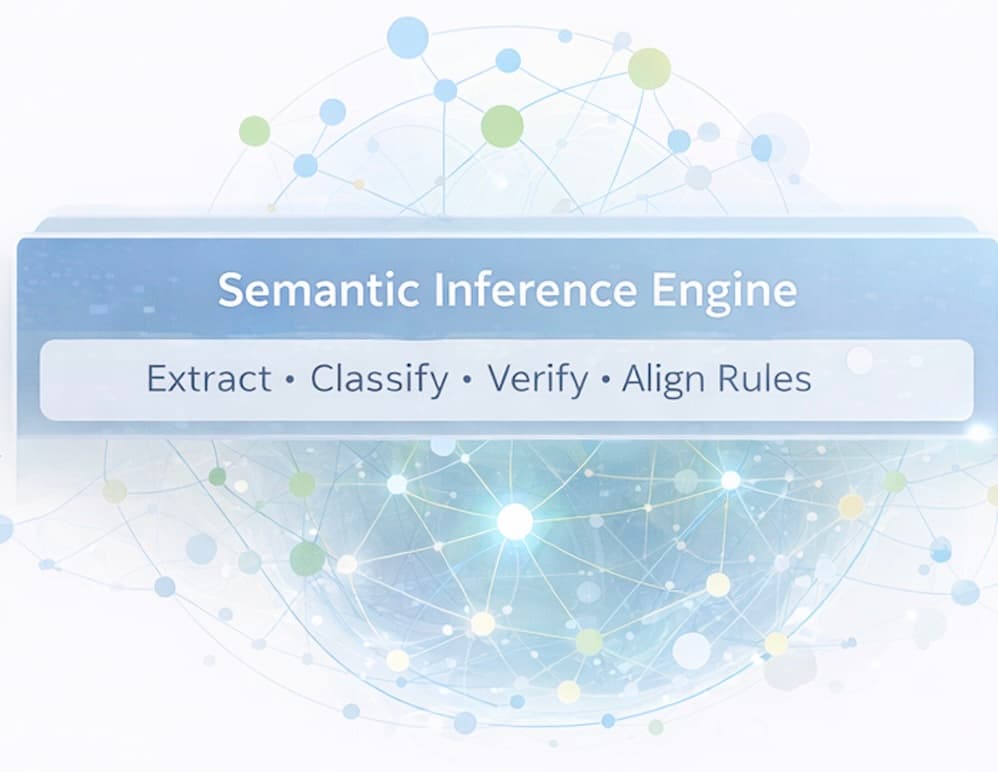
Multiple artifact types
Spreadsheets, images, work instructions, forms, quality records, contracts, and operational data.
KaryaMesh helps enterprises understand, extract, connect, and verify information across spreadsheets, images, work instructions, specifications, forms, compliance records, contracts, and other business artifacts — so teams can ask questions in plain English, enforce business rules, and catch discrepancies before they become risk.
Built for enterprises where critical knowledge is fragmented across many artifact types, teams, and systems.
Spreadsheets, images, work instructions, forms, quality records, contracts, and operational data.
Facts, entities, approvals, relationships, lineage, and evidence linked together.
Plain-English answers, discrepancy detection, and rule enforcement.
In most enterprises, important information does not live in one place. It is spread across spreadsheets, images, work instructions, specifications, forms, compliance records, contracts, logs, and other artifacts created by different teams, partners, and systems.
That fragmentation creates real business pain. Teams spend time searching, reconciling, and validating information manually. Related artifacts are difficult to connect. Answers depend on tribal knowledge. Inconsistencies go unnoticed until late. Decisions are made without complete context.
KaryaMesh turns disconnected enterprise artifacts into a connected, queryable, verifiable intelligence layer.
KaryaMesh is designed to work from the realities of enterprise information — fragmented artifacts, partial context, and rules that matter.
Spreadsheets, images, work instructions, specifications, forms, compliance records, contracts, logs, and other business artifacts are ingested and interpreted as structured enterprise context.
Known relationships between artifacts, entities, processes, or business concepts can be provided as a starting point. KaryaMesh uses them to accelerate understanding while continuing to discover additional relationships automatically.
Business rules define what must be enforced, validated, escalated, or reviewed. KaryaMesh applies these rules during ingestion, linking, querying, and discrepancy detection.
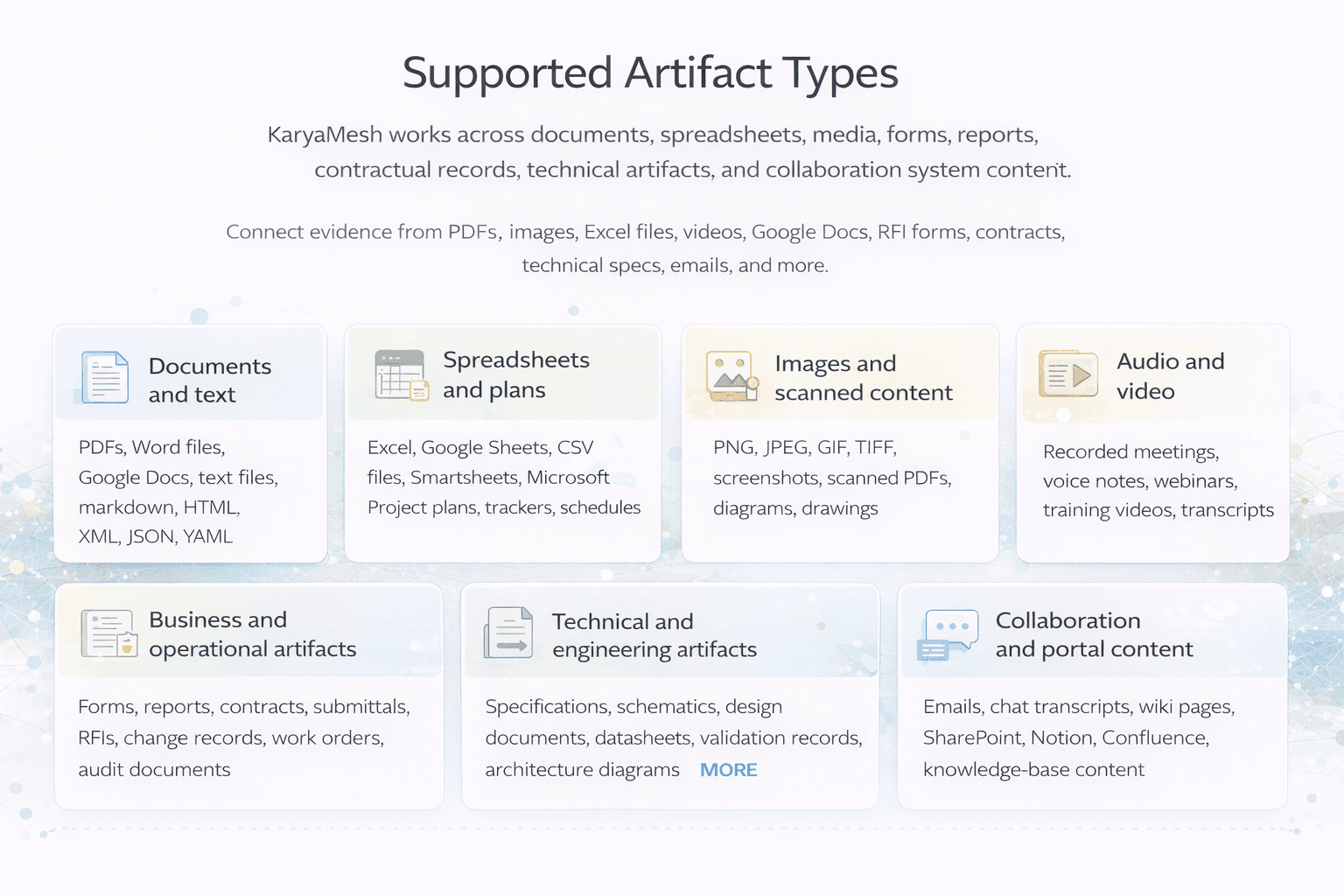
KaryaMesh processes a wide range of business document types, from spreadsheets and text files to images, PDFs, work instructions, quality records, and specialized formats. The platform's semantic engines understand context across all artifact types.
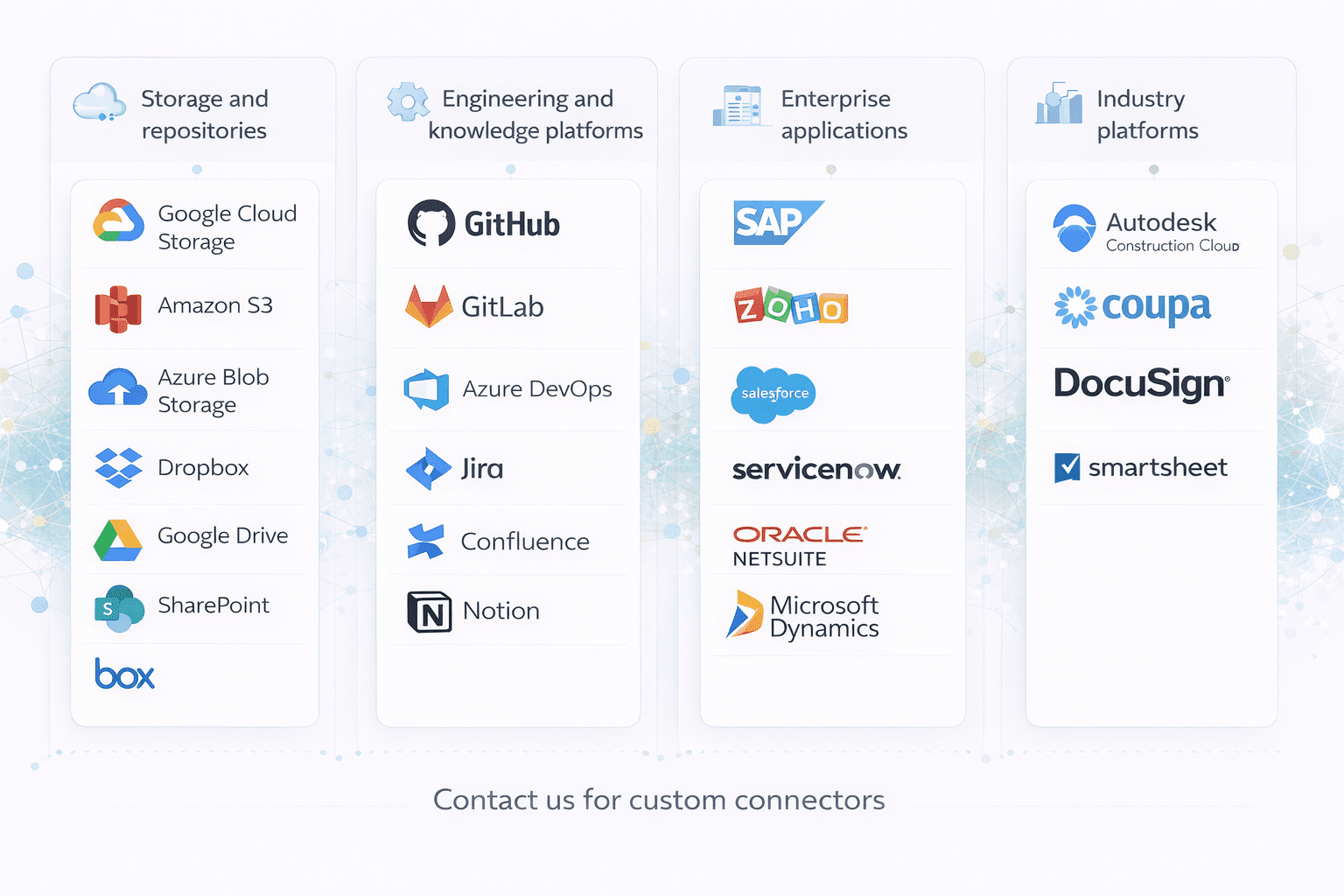
KaryaMesh can pull enterprise artifacts from the source systems teams already use. Use the available connectors across the categories and tools shown here to bring content, records, and operational evidence into the platform faster.
If the desired tool or source is not listed, KaryaMesh can also build custom connectors so the right artifacts still become part of the governed knowledge fabric.
KaryaMesh performs initial discovery, semantic classification, knowledge extraction, verification, and rule alignment across enterprise artifacts. It then refines those outputs through multi-pass inference to build a connected, queryable, and enforceable intelligence layer.
Bring in spreadsheets, images, work instructions, specifications, forms, compliance records, contracts, and operational records from enterprise sources.
KaryaMesh identifies what each artifact is, how it is structured, and what information matters.
Extracted facts, entities, relationships, approvals, references, and dependencies are linked into a knowledge graph.
Users ask questions in plain English, trace answers to evidence, and enforce business rules across the connected artifact landscape.
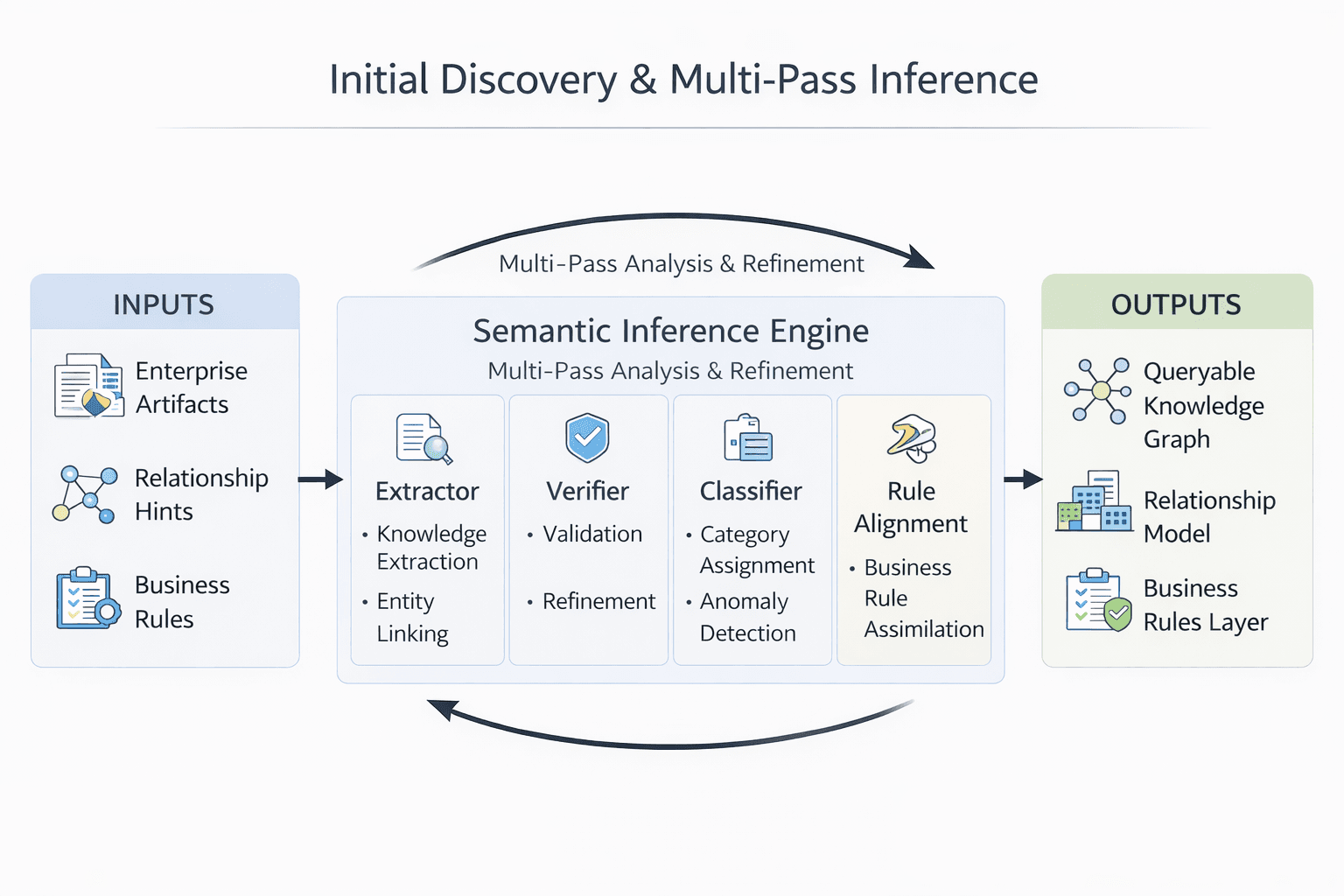
Initial Discovery & Multi-Pass Inference
Ask natural-language questions across fragmented enterprise artifacts and get contextual, evidence-backed answers.
Which production lot is tied to this quality exception, and does it match the latest approved specification?
Surface mismatches, conflicting values, missing approvals, compliance risks, and broken linkages across related artifacts.
Show me supplier records where the delivered item does not match the approved specification.
Move from one artifact to related entities, approvals, requirements, versions, and decisions through connected context.
What artifacts, reviewers, and approvals are tied to this issue?
Validate required relationships, approvals, versions, deadlines, and tolerances across the workflow.
Which records violate current approval or version rules?
KaryaMesh is especially valuable where critical business knowledge is spread across many artifact types, teams, and systems.
Connect SOPs, batch records, deviations, CAPAs, specifications, validation artifacts, and quality records into a traceable intelligence layer.
Which released batches reference an outdated specification or unresolved deviation?
Link BOMs, work instructions, inspection reports, engineering changes, supplier artifacts, and maintenance records into connected operational intelligence.
Which production lots used an outdated part revision or failed inspection without a linked disposition?
Connect RFQs, supplier bids, contracts, purchase orders, invoices, shipping records, certificates, and receiving artifacts across the source-to-pay lifecycle.
Which invoices do not match purchase orders or receiving records within allowed tolerance?
Link agreements, amendments, statements of work, obligations, approval records, renewal notices, and policy exceptions into a connected legal intelligence layer.
Which active agreements contain non-standard terms without approved exception records?
KaryaMesh is not just a query layer. It helps enterprises apply rules across related artifacts and workflows, so teams can validate what is required, identify what is missing, and act before issues become operational, financial, or compliance problems.
From “find the information” to “verify the business condition.”
KaryaMesh does not stop at finding content. It understands, connects, and verifies across artifacts.
It works across multiple artifact types, not just a single format or repository.
Facts, entities, approvals, and relationships are connected into a structured intelligence layer.
Users can ask questions naturally without learning rigid query syntax.
Responses are grounded in linked artifacts and traceable context.
Rules are applied across the connected artifact landscape, not as isolated checks.
Whether your challenge is traceability, discrepancy detection, business-rule enforcement, or cross-artifact question answering, KaryaMesh helps turn fragmented enterprise artifacts into connected intelligence.